Things can be so different after traveling overseas. For example, Chinese food.
So many people living outside of China think that fortune cookies are an essential part of Chinese food. But when they come to China and eat in a Chinese restaurant, they never find them.
The question is: Where can you taste the most authentic Chinese food? In Chinese restaurants outside of China, or in Chinese restaurants in China? They are quite different things, mind you!
ad-textbook

Sunday, March 09, 2008
Sunday, February 24, 2008
Writing is an Idea
Quote from Ideas A History From Fire To Freud by Peter Watson:
Writing is an idea, a very important idea, which was invented before 3000 BC. Today, however, we tend not to regard letters or words as inventions, as we do computers or mobile phones, because they have been so long with us. But inventions are evidence of ideas. I have treated language an an idea, because language reflects the way that people think, and the ways in which languages differ characterize the social and intellectual history of different populations. In addition, most ideas are conceived in language. Thus I consider th history and structure of the world's most intellectually influential languages: Chinese, Sanskrit, Arabic, Latin, French and English.

Saturday, February 09, 2008
Do you know why people don't understand you
After said something about the possible reasons of why you don't understand other people, it's time to say the other way: why people don't understand you.
Successful communications take two ways. For a Mandarin Chinese learner, it's not uncommon that they tried so hard to say something, and that something didn't get across to the other end at all. I have witnessed countless times when this happened. It's very discouraging to any learners indeed.
Most people will naturally point it out that it's the pronunciation that fails the learners. Especially Mandarin, a radically different language, has so many different sounds, and so tonal. However, from my observation, this is the last thing between you and your listeners. There are other things far more important. Here are my three points listed in order of importance:
1) Language structure and habit
2) How to use the vocab you know to say something you don't know
3) Your accent (pronunciation)
Most people get tumbled on the first point when they think it's everything but. For instance, one person wanted to order water in a restaurant. He learned that water is "shui" with the third tone. So he told the waitress: "shui3." And the waitress looked all confused and didn't understand what he wanted. It's not that he said anything wrong. It's that he didn't know when Chinese people order water they wouldn't only say "shui3" as a westerner would do in a western restaurant. Chinese people tend to say a bit more like: "yi ping kuang quan shui", or "yi bei shui", or "yi bei re shui", or something shui.
The second point baffled so many people. One common complain is that "I don't have enough vocab." Probably nobody will ever have enough vocab even for native speakers. The trick is that as a second language speaker one needs to change some speaking patterns that he is so used to as a first language speaker. If you don't know how to say "Don't hurry.", you can say "We have time" (wo men you shi jian.) instead. For those diligent students, they will look up a dictionary and find hurry as "gan jin 赶紧", or "cang cu 仓促", etc. But then they tend to fall in the first catch of neglecting structure or habit and say something like: bu cang cu. And that will not get your meaning across.
The last part that may hinder people understand you is your accent (pronunciation). If you have taken care of the first and second points, you are fine most of the time. If you know "don't hurry" is "bie zhao ji 别着急", you can assure that people will understand you even you say the phrase in a quite different accent. A person from Qing Dao will say "bie zhao ji" quite differently from a person from Luo Yang. And you, just add some flavor to hundreds of different accents that Chinese people already have, get a quite nice and distinctive Spanish accent, German accent, or English accent. No big deal.
Now it's time to think what is the real thing that stands between you and a smooth communication.
Successful communications take two ways. For a Mandarin Chinese learner, it's not uncommon that they tried so hard to say something, and that something didn't get across to the other end at all. I have witnessed countless times when this happened. It's very discouraging to any learners indeed.
Most people will naturally point it out that it's the pronunciation that fails the learners. Especially Mandarin, a radically different language, has so many different sounds, and so tonal. However, from my observation, this is the last thing between you and your listeners. There are other things far more important. Here are my three points listed in order of importance:
1) Language structure and habit
2) How to use the vocab you know to say something you don't know
3) Your accent (pronunciation)
Most people get tumbled on the first point when they think it's everything but. For instance, one person wanted to order water in a restaurant. He learned that water is "shui" with the third tone. So he told the waitress: "shui3." And the waitress looked all confused and didn't understand what he wanted. It's not that he said anything wrong. It's that he didn't know when Chinese people order water they wouldn't only say "shui3" as a westerner would do in a western restaurant. Chinese people tend to say a bit more like: "yi ping kuang quan shui", or "yi bei shui", or "yi bei re shui", or something shui.
The second point baffled so many people. One common complain is that "I don't have enough vocab." Probably nobody will ever have enough vocab even for native speakers. The trick is that as a second language speaker one needs to change some speaking patterns that he is so used to as a first language speaker. If you don't know how to say "Don't hurry.", you can say "We have time" (wo men you shi jian.) instead. For those diligent students, they will look up a dictionary and find hurry as "gan jin 赶紧", or "cang cu 仓促", etc. But then they tend to fall in the first catch of neglecting structure or habit and say something like: bu cang cu. And that will not get your meaning across.
The last part that may hinder people understand you is your accent (pronunciation). If you have taken care of the first and second points, you are fine most of the time. If you know "don't hurry" is "bie zhao ji 别着急", you can assure that people will understand you even you say the phrase in a quite different accent. A person from Qing Dao will say "bie zhao ji" quite differently from a person from Luo Yang. And you, just add some flavor to hundreds of different accents that Chinese people already have, get a quite nice and distinctive Spanish accent, German accent, or English accent. No big deal.
Now it's time to think what is the real thing that stands between you and a smooth communication.
Thursday, January 24, 2008
You Need to Know Why You Don't Understand People
If I ask 10 people this question: Do you think why you don't understand when you are talking to Chinese people?
It's a safe bet that I'll get one answer: It's the vocabulary. I need to learn more vocabulary.
Vocabulary certainly is a barrier, but it is one only for beginners. There are people who have learned Chinese for years, and accumulate vast amount of vocabulary. But when in real life, they still get lost quite quickly.
In fact you face three barriers:
1- vocabulary and sentence patterns
2- talking speed
3- accent
The first one is the easiest one to solve. You can employ many different methods. The end result is to remember certain words and sentence patterns. It's also the reason why learning reading and writing is easier than learning listening and speaking. When in reading and writing, your brain has time to recollect your memory, and if you have done your homework well you will find it easy to learn reading and writing. Although it's the easiest one to accomplish, memorizing large amount of vocab and grammar patterns can still be a daunting task.
The second one is not so easy to tackle. And most of the time, it's speaking speed that hinders your understanding. You have no time to reflect and it's already over. You need to have rigorous training on listening until a foreign sound becomes so familiar and you can call it your second nature. It's not so easy. It requires hours and hours of listening training.
The third one is the most difficult. When you are out of your classroom and your standard tape recording, you face people with different accents. There are so many different accents out there. And those accents can really lost you. The good news is if this is the only reason why you don't understand, you can adapt to it fairly quickly.
In the end, that's just why there's so much fun in learning Chinese!
It's a safe bet that I'll get one answer: It's the vocabulary. I need to learn more vocabulary.
Vocabulary certainly is a barrier, but it is one only for beginners. There are people who have learned Chinese for years, and accumulate vast amount of vocabulary. But when in real life, they still get lost quite quickly.
In fact you face three barriers:
1- vocabulary and sentence patterns
2- talking speed
3- accent
The first one is the easiest one to solve. You can employ many different methods. The end result is to remember certain words and sentence patterns. It's also the reason why learning reading and writing is easier than learning listening and speaking. When in reading and writing, your brain has time to recollect your memory, and if you have done your homework well you will find it easy to learn reading and writing. Although it's the easiest one to accomplish, memorizing large amount of vocab and grammar patterns can still be a daunting task.
The second one is not so easy to tackle. And most of the time, it's speaking speed that hinders your understanding. You have no time to reflect and it's already over. You need to have rigorous training on listening until a foreign sound becomes so familiar and you can call it your second nature. It's not so easy. It requires hours and hours of listening training.
The third one is the most difficult. When you are out of your classroom and your standard tape recording, you face people with different accents. There are so many different accents out there. And those accents can really lost you. The good news is if this is the only reason why you don't understand, you can adapt to it fairly quickly.
In the end, that's just why there's so much fun in learning Chinese!
Thursday, January 10, 2008
Want to ride a bus, anyone?
I stayed in Beijing for a week from Dec 26, 2007 to Jan 1, 2008.
It was a good time to visit Beijing, to appreciate the Forbidden City and the Great Wall in the cold and very windy winter. And indeed I saw plenty visitors from all over the world in those places. People speak all kinds of languages and some of foreign visitors can speak Chinese too.
But when I was outside of the tourist attractions, I saw no foreign visitors. When I was in a public bus, or when I was in a small neighborhood restaurant, or when I was in a local convenient store, I had no foreign visitor in sight! Where did they go? What did they do?
I sincerely hope that Beijing's attraction is beyond the Forbidden City and the Great Wall. And people (at least those who take Mandarin lessons) are courageous enough to explore some small wonders in the nearby neighborhoods, and can have the opportunity to see ordinary people's lives.
It was a good time to visit Beijing, to appreciate the Forbidden City and the Great Wall in the cold and very windy winter. And indeed I saw plenty visitors from all over the world in those places. People speak all kinds of languages and some of foreign visitors can speak Chinese too.
But when I was outside of the tourist attractions, I saw no foreign visitors. When I was in a public bus, or when I was in a small neighborhood restaurant, or when I was in a local convenient store, I had no foreign visitor in sight! Where did they go? What did they do?
I sincerely hope that Beijing's attraction is beyond the Forbidden City and the Great Wall. And people (at least those who take Mandarin lessons) are courageous enough to explore some small wonders in the nearby neighborhoods, and can have the opportunity to see ordinary people's lives.
Friday, December 07, 2007
I want to go to Beijing for one month
I heard this quite often: "I want to go to Beijing for one month and study putonghua."
It sounds good, but the real question should be asked is "then what?"
If anybody believes that one month stay in Beijing (or even six months stay) can make a person a fluent putonghua speaker, and require no further study, this person is too naive.
A devoted full month study is excellent no matter where you are. The real challenge comes after that. When you don't have that much of time, when your life goes back to pre-study routine, it's time for you to really concentrate on how you can carry on your study.
I read this sentence in a coffee shop. It's excellent for putonghua learners as well:
You do what you can at where you are.
It sounds good, but the real question should be asked is "then what?"
If anybody believes that one month stay in Beijing (or even six months stay) can make a person a fluent putonghua speaker, and require no further study, this person is too naive.
A devoted full month study is excellent no matter where you are. The real challenge comes after that. When you don't have that much of time, when your life goes back to pre-study routine, it's time for you to really concentrate on how you can carry on your study.
I read this sentence in a coffee shop. It's excellent for putonghua learners as well:
You do what you can at where you are.
Tuesday, November 20, 2007
Training Your Hand rather than Your Brain
I've seen many many people bought a huge stack of Chinese characters cards, roughly 1000 at least, to study. They read each card, trying to remember what the character looks like, and read the explanations, and, try to read the sample sentences, but often failed here because there are too many news words in the sample sentences. Then what happened?
They quickly forgot what they learned.
Leaning characters is a process of training your hand rather than your brain. If you write enough times, your hand will remember each characters better than your brain can. And your hand will remember those tiny details that differentiate different characters. For example: 已, 己, 巳.
Trust your hand more. It's more reliable.
They quickly forgot what they learned.
Leaning characters is a process of training your hand rather than your brain. If you write enough times, your hand will remember each characters better than your brain can. And your hand will remember those tiny details that differentiate different characters. For example: 已, 己, 巳.
Trust your hand more. It's more reliable.
Saturday, October 20, 2007
Running in the dark nights
It is said that sometimes people want to get somewhere quickly and they run in the dark nights. The problem is that they are running in the wrong direction. But running itself keep them feeling comfortable and hoping that they are getting closer.
If you want to learn Mandarin as much as you can and as fast as you can. Be careful, and be alert on where you are going. If you want to achieve speaking and listening fluency, reading lots of grammar will not get you there. Only speaking and listening exercises will. If you want to achieve reading and writing fluency, study decks of decks of character cards will not get you there. Only reading and writing passages will.
You don't want to run in the dark nights in a wrong direction. Even you run as hard as you can, you won't get to where you want to be.
If you want to learn Mandarin as much as you can and as fast as you can. Be careful, and be alert on where you are going. If you want to achieve speaking and listening fluency, reading lots of grammar will not get you there. Only speaking and listening exercises will. If you want to achieve reading and writing fluency, study decks of decks of character cards will not get you there. Only reading and writing passages will.
You don't want to run in the dark nights in a wrong direction. Even you run as hard as you can, you won't get to where you want to be.
Saturday, September 22, 2007
Putonghua and local dilect
For lots of Putonghua students, it's their goal that they can travel around China using only Putonghua. It's very doable in many places, but it can also be quite difficult.
I just had a short trip to Wuhan, Hubei. And I was surprised to find out that Wuhan people prefer Hubeihua rather than Putonghua, even when they are talking to Putonghua speaking people. Hubeihua sounds kind of similar to Putonghua, but only to native ears.
I believe it's very difficult for Putonghua students to understand them, especially those who are programmed in standard four tones.
When asked why they only speak Hubeihua, Wuhan people said that it's habit, or it's not enough education. One or the other. They certainly have no problems understanding Putonghua. They just don't want to speak it!
I just had a short trip to Wuhan, Hubei. And I was surprised to find out that Wuhan people prefer Hubeihua rather than Putonghua, even when they are talking to Putonghua speaking people. Hubeihua sounds kind of similar to Putonghua, but only to native ears.
I believe it's very difficult for Putonghua students to understand them, especially those who are programmed in standard four tones.
When asked why they only speak Hubeihua, Wuhan people said that it's habit, or it's not enough education. One or the other. They certainly have no problems understanding Putonghua. They just don't want to speak it!
Saturday, September 01, 2007
Not satisfied at your progress?
If you have spent at least one hour per day to study Chinese, to review, to do homework and probably watch Chinese programs on TV, but somehow you don't feel you have made any progress.
It could be that you still utter badly pronounced words, or you still struggle to make a full sentence, or you still can't understand the simplest questions when you hear them. Maybe it's time for you to consider that it's your teacher who didn't do a good job.
It could be that you still utter badly pronounced words, or you still struggle to make a full sentence, or you still can't understand the simplest questions when you hear them. Maybe it's time for you to consider that it's your teacher who didn't do a good job.
Friday, August 03, 2007
Moving forward is as important as review
Sometimes people stop learning because they feel that they need to re-study what they have learned before. It's a good idea. But most of time, it turned out to be a trap.
Re-study can be boring, and that leads to low motivation, and that leads to low self-esteem, and that leads to stop, and that leads to abandon, and that leads to totally forget whatever you have!
Feelings sometimes can be very misleading, and waiting for tomorrow's miracle certainly will never happen. The best way is to forge ahead, move on, roll and stop worrying so much.
Re-study can be boring, and that leads to low motivation, and that leads to low self-esteem, and that leads to stop, and that leads to abandon, and that leads to totally forget whatever you have!
Feelings sometimes can be very misleading, and waiting for tomorrow's miracle certainly will never happen. The best way is to forge ahead, move on, roll and stop worrying so much.
Thursday, July 05, 2007
Is Summer a good time to study?
Maybe not. That's why schools are all closed during the Summer.
There are too many distractions. Good weather, bad weather, sports, TV, movies, trips and meals, etc, etc. To keep a good disciplined study plan is almost impossible.
Do you want to play the leading actor/actress in Study Mission Impossible?
There are too many distractions. Good weather, bad weather, sports, TV, movies, trips and meals, etc, etc. To keep a good disciplined study plan is almost impossible.
Do you want to play the leading actor/actress in Study Mission Impossible?
Saturday, June 16, 2007
11 years in China

Over the years, I have met people who have stayed in China for 11 years and don't speak Chinese, and also those who do. Sometimes I'm not sure which type is more impressive. How can anybody resist the temptation of speaking to the locals using their own language?
The gentleman in the picture, Guo Tong, has stayed in China for 11 years, speaks good Chinese, and doing business in China. Chinese language skills are essential to him.
Friday, May 18, 2007
Reading stories
If the whole textbook is full of conversations, dialogs which are supposedly very useful but actually are not (people are not scripted when they are speaking), what can you do?
My suggestion is: start reading interesting stories.
My suggestion is: start reading interesting stories.
Saturday, April 21, 2007
Mandarin Songs
Last night I went to a Turkish restaurant for dinner. There had live music. I guess they could be from Philippines, Mexico, or some other tropical countries since they have this nice brown skin.
They sang a lot of English songs. Since it was a small restaurant and also I was sitting right in front of them, they asked me where I was from. After learned I am from China, they smiled and said "ni hao" to me. That was really nice of them. And then, they did something even nicer - they sang two Chinese songs.
One was Qi Qin's "da yue zai dong ji", the other one was Deng Lijun's "yueliang daibiao wo de xin". They did really well, and I was very happy sitting there and listening. Later on they told me it had been a long time since they sang Chinese songs, but they really loved it.
They sang a lot of English songs. Since it was a small restaurant and also I was sitting right in front of them, they asked me where I was from. After learned I am from China, they smiled and said "ni hao" to me. That was really nice of them. And then, they did something even nicer - they sang two Chinese songs.
One was Qi Qin's "da yue zai dong ji", the other one was Deng Lijun's "yueliang daibiao wo de xin". They did really well, and I was very happy sitting there and listening. Later on they told me it had been a long time since they sang Chinese songs, but they really loved it.
Wednesday, April 04, 2007
How far can good memory go?
Not very far. I have seen people with excellent memory. Quite often, once they see a new word, or hear a new word, they will remember it for as long as a day. That's all there is. If they don't review, or practice in one form or another, they will forget what they have learned.
It's a great advantage for people who have excellent memory, but also a great pit fall. This type of people tend to be over confident and neglect the fact that learning a language requires more than just memory. Learning a language is a journey with commitment.
It's a great advantage for people who have excellent memory, but also a great pit fall. This type of people tend to be over confident and neglect the fact that learning a language requires more than just memory. Learning a language is a journey with commitment.
Saturday, February 24, 2007
Object vs Context
Richard Nisbett's The Geography of Thought is a very interesting read. Asians and Westerners are so different in so many ways, and they live in literally a very different world.
He discussed the language effects which I find really intriguing.
Western languages force a preoccupation with focal objects as opposed to context. English is a "subject-prominent" language. There must be a subject even in the sentence "It is raining." Japanese, Chinese, and Korean, in contrast, are "topic-prominent" languages.
I don't know Japanese or Korean, but I do know "It is raining" in Chinese is "xia yu le!"
It's indeed very different. It shows that to learn Chinese, at least for English speaking people, it's much better to learn through context than to memorize a dictionary. And be prepared, learning Chinese can change your world, literally!!
He discussed the language effects which I find really intriguing.
Western languages force a preoccupation with focal objects as opposed to context. English is a "subject-prominent" language. There must be a subject even in the sentence "It is raining." Japanese, Chinese, and Korean, in contrast, are "topic-prominent" languages.
I don't know Japanese or Korean, but I do know "It is raining" in Chinese is "xia yu le!"
It's indeed very different. It shows that to learn Chinese, at least for English speaking people, it's much better to learn through context than to memorize a dictionary. And be prepared, learning Chinese can change your world, literally!!
Wednesday, February 07, 2007
Learning a language is too expensive to waste
Learning a language can be very expensive. Not only the money you paid to school or your tutor, but also the time and energy you committed.
If you started with two weeks program, and four weeks later you forgot everything, all the effort your have made is wasted! It's better that you didn't start it at all. You can use the money, the time and the energy to do something more beneficial, like go hiking or read a book.
My advice is that if you are not sure, don't start. If you have committed, you should carry on for more than one year to not waste anything.
If you started with two weeks program, and four weeks later you forgot everything, all the effort your have made is wasted! It's better that you didn't start it at all. You can use the money, the time and the energy to do something more beneficial, like go hiking or read a book.
My advice is that if you are not sure, don't start. If you have committed, you should carry on for more than one year to not waste anything.
Tuesday, January 30, 2007
Workbook Basic Level B Available Online Now

Workbook Basic Level B now is available at online store front www.msllearningcenter.com/catalog.
It is good for people who have had 150 - 200 hours of Mandarin instructions, and in need of more good exercises, especially listening exercises.
Have fun!
Tuesday, January 23, 2007
Workbook Basic Level B

The production of Workbook Basic Level B is finished!
This one is loaded with listening exercises.
I always say that listening exercises are crucial and I can't stress more on how important it is to language development. This is good news for anybody who is on Basic Level B, loads and loads of listening exercises are right there! 74 listening exercises out of 120 exercises in total.
This book will hit our online store front soon!
Monday, January 15, 2007
Learn a New Language, Delay Dementia
This article is interesting, or at least to anyone who is learning a new language:
http://www.newsmax.com/blaylock/2.cfm?s=sp&promo_code=2C19-1
So, happy learning!
By knowing more than one language, researchers from Toronto say you can delay the onset of dementia symptoms.This article is from newsmax.com, you can read editor's note here:
The new study suggests that the mental agility required to speak two or more languages may actually stave off mental decline.
The Baycrest Centre for Geriatric Care in Toronto looked at 184 Toronto-area people.
Researchers found that in people who only spoke one language, symptoms of dementia showed up on average at the age of 70 in men and 71 in women.
For those who knew two or more languages, the study found that dementia didn’t appear until age 76 in men and 75 for women.
The study will be published in the February issue of Neuropsychologia.
http://www.newsmax.com/blaylock/2.cfm?s=sp&promo_code=2C19-1
So, happy learning!
Friday, January 05, 2007
Who had a great New Year?
If you ate, drank, watched a lot of TV, it's time to shake up now!
Did you put exercises into your daily schedule? Did you put your study plan into your daily schedule?
If you did, great! If you haven't, do it today!
As a long New Year celebration and gift, from Jan 1 to Feb 28, right after Chinese New Year, all Intro level audio lessons have 20% discount. Check them out here.
Did you put exercises into your daily schedule? Did you put your study plan into your daily schedule?
If you did, great! If you haven't, do it today!
As a long New Year celebration and gift, from Jan 1 to Feb 28, right after Chinese New Year, all Intro level audio lessons have 20% discount. Check them out here.
Saturday, December 23, 2006
A very fair and reasonable comment
A Mandarin Student Chris in UK discussed about my Learning Mandarin Podcast in his blog.
I run into his blog and delightedly read through his fair and reasonable comment. It's really nice since he obviously sated very clear and accurate of the purpose of my setting up this podcast.
you can read it here.
I run into his blog and delightedly read through his fair and reasonable comment. It's really nice since he obviously sated very clear and accurate of the purpose of my setting up this podcast.
you can read it here.
Tuesday, December 19, 2006
The use of a dictionary
Have you ever thought about that if you remember all the words in a dictionary, you will speak fluent Mandarin?
Well, if you are like me 20 years ago when I was learning English, I guarantee that you will fail.
20 years ago, I thought the reason that I couldn't speak English was I didn't have enough vocabulary. So I bought a dictionary like book English Vocabulary 10000. This book guaranteed me that after remembered all the words there, I could speak great English.
It took me four to five months to get through the book from cover to cover. I learned a lot of interesting words that I don't remember now. But guess what, I still couldn't speak English. And I realized that by just expanding vocabulary doesn't work. I have to try something else.
Well, if you are like me 20 years ago when I was learning English, I guarantee that you will fail.
20 years ago, I thought the reason that I couldn't speak English was I didn't have enough vocabulary. So I bought a dictionary like book English Vocabulary 10000. This book guaranteed me that after remembered all the words there, I could speak great English.
It took me four to five months to get through the book from cover to cover. I learned a lot of interesting words that I don't remember now. But guess what, I still couldn't speak English. And I realized that by just expanding vocabulary doesn't work. I have to try something else.
Monday, December 18, 2006
Diet Chocolate Cake
Christmas is around corner. Holiday season usually means "eat a lot and get fat".
But there was a TV show I watched last week said something different. They invented diet chocolate cake, low calorie pudding, and low calorie cookies. If you want to eat a lot and still be healthy, there is a way now!
Also, treasure this: if you spend 20 minutes a day to review your Mandarin or to listen to an audio lesson track, you will feel even better!
This is this holiday season's keep fit suggestion: diet chocolate cake + 20 minutes Mandarin/day
But there was a TV show I watched last week said something different. They invented diet chocolate cake, low calorie pudding, and low calorie cookies. If you want to eat a lot and still be healthy, there is a way now!
Also, treasure this: if you spend 20 minutes a day to review your Mandarin or to listen to an audio lesson track, you will feel even better!
This is this holiday season's keep fit suggestion: diet chocolate cake + 20 minutes Mandarin/day
Friday, December 15, 2006
The habit of accomplish your goals
You enjoy learning Mandarin more when you accomplish more.
But accomplish more doesn't mean that you suddenly speak fluent Mandarin next week or next month. Accomplish more means you set up many many smaller goals and then achieve those small goals. Every step is an achievement, each week is a time to celebrate. Thus you get yourself into a habit of accomplish your goals.
You should feel good about yourself on every small step you made. You should be proud of yourself on every small goal you achieved. The very next small step is all you need to concentrate on, and this small step is very achievable as well.
In doing this, there is only one ultimate result in front of you: success.
But accomplish more doesn't mean that you suddenly speak fluent Mandarin next week or next month. Accomplish more means you set up many many smaller goals and then achieve those small goals. Every step is an achievement, each week is a time to celebrate. Thus you get yourself into a habit of accomplish your goals.
You should feel good about yourself on every small step you made. You should be proud of yourself on every small goal you achieved. The very next small step is all you need to concentrate on, and this small step is very achievable as well.
In doing this, there is only one ultimate result in front of you: success.
Thursday, December 14, 2006
The inevitable bump
Learning Mandarin is just like everything else in life. There will be times that you feel terrible about yourself, or you are too distracted by other things.
The way to handle it is also the same way to handle other inevitable bumps: Stick to your road map. Summon your extra strength to put one foot in front of another. Hang in there.
When the dark time is over, you will be happy that you didn't give up. You carried on.
The way to handle it is also the same way to handle other inevitable bumps: Stick to your road map. Summon your extra strength to put one foot in front of another. Hang in there.
When the dark time is over, you will be happy that you didn't give up. You carried on.
Wednesday, December 13, 2006
It's time to formulate a road map
If you have decided that in the end of 2007, you want to be able to carry on basic simple conversations in Chinese, you need to formulate a road map NOW.
The importance of the road map is to break down a major task into many many small tasks, into many many smaller goals. So that you can ONLY focus on the next goal.
From my experience, most people can carry on basic simple conversations after they finish Intro level. In Intro Level, there are two books, Intro level A and Intro Level B. Each book has 10 lessons and two reviews. From now till the end of 2007, you have 52 weeks. Here is a basic road map (the assumption is that you are doing self-study):
Week 1 : Listen to Intro A lesson 1 audio lesson every day
Week 2: Finish Intro A workbook lesson 1 (10 exercises in total, so 2 exercises per day).
Week 3: Listen to Intro A lesson 2 audio lesson every day
Week 4: Finish Intro A workbook lesson 2 (2 exercises per day)
Week 5: Listen to Intro A lesson 3 audio lesson every day
Week 6: Finish Intro A workbook lesson 3
...
Week 11: Review lesson 1 - 5 by listening to the audio lessons
Week 12: Finish Intro A workbook review 1-5 exercises
...
Week 23: Review Lesson 6-10 by listening to the audio lessons
Week 24: Finish Intro A workbook review 6-10
...
Week 47: Review Intro B lesson 16-20 by listening to the audio lessons
Week 48: Finish Intro B workbook review 16-20
Week 49 - 52: It's time to celebrate your success and plan for your next road map. Also time for a great Christmas!
The key issue is that you need to set your road map step by step to carry on from where you are now to where you want to be, and make sure you follow your map. Don't rush too fast, neither too slow. Always ONLY focus on your next step!
The importance of the road map is to break down a major task into many many small tasks, into many many smaller goals. So that you can ONLY focus on the next goal.
From my experience, most people can carry on basic simple conversations after they finish Intro level. In Intro Level, there are two books, Intro level A and Intro Level B. Each book has 10 lessons and two reviews. From now till the end of 2007, you have 52 weeks. Here is a basic road map (the assumption is that you are doing self-study):
Week 1 : Listen to Intro A lesson 1 audio lesson every day
Week 2: Finish Intro A workbook lesson 1 (10 exercises in total, so 2 exercises per day).
Week 3: Listen to Intro A lesson 2 audio lesson every day
Week 4: Finish Intro A workbook lesson 2 (2 exercises per day)
Week 5: Listen to Intro A lesson 3 audio lesson every day
Week 6: Finish Intro A workbook lesson 3
...
Week 11: Review lesson 1 - 5 by listening to the audio lessons
Week 12: Finish Intro A workbook review 1-5 exercises
...
Week 23: Review Lesson 6-10 by listening to the audio lessons
Week 24: Finish Intro A workbook review 6-10
...
Week 47: Review Intro B lesson 16-20 by listening to the audio lessons
Week 48: Finish Intro B workbook review 16-20
Week 49 - 52: It's time to celebrate your success and plan for your next road map. Also time for a great Christmas!
The key issue is that you need to set your road map step by step to carry on from where you are now to where you want to be, and make sure you follow your map. Don't rush too fast, neither too slow. Always ONLY focus on your next step!
Tuesday, December 12, 2006
Shoot for the stars!
Before you set up any plan, it's important to know where you want to end up.
Do you want to:
If you don't know where you want to end up with, you won't go anywhere!
Set a goal! Shoot for the starts!
Do you want to:
- Carry basic conversations
- Express your self freely
- Use natural speech when socializing with Chinese people
- Discuss world issues and all kinds of topics
If you don't know where you want to end up with, you won't go anywhere!
Set a goal! Shoot for the starts!
Monday, December 11, 2006
Make Year 2007 Your Most Successful Year
To make year 2007 your most successful year takes planning. You can plan anything now for the things you want to achieve next year. To narrow our focus, we only discuss learning Chinese here.
This is a borrowed quote:
If you started in 2006 and carried on, it's time to appreciate how far you have gone. If you didn't start in 2006 and would like to learn, now is a good time to set a plan!
This is a borrowed quote:
The best time to learn Chinese is last year. The second best time is this year.
If you started in 2006 and carried on, it's time to appreciate how far you have gone. If you didn't start in 2006 and would like to learn, now is a good time to set a plan!
Friday, December 08, 2006
The Toilets in China
Very often I heard people telling me about their trips to China were very exciting, interesting in many ways except their experience of the public toilets.
I agree that public toilets in most of the places are not great.
If all the public toilets are improved over night, things will be perfect. As life has taught us many times that nothing is perfect, so take this as part of the package of your China trip and enjoy more with talking to people, eating great Gong Bao chicken.
I agree that public toilets in most of the places are not great.
If all the public toilets are improved over night, things will be perfect. As life has taught us many times that nothing is perfect, so take this as part of the package of your China trip and enjoy more with talking to people, eating great Gong Bao chicken.
Wednesday, December 06, 2006
This is for those who have made amazing results.
There are success stories happening everyday around me.
Henry started his Mandarin lesson in Nov 2005. In a year time, despite all the trips, travels and work load, Henry made very impressive results by finishing Pre-intermediate B.
Tim and Wantanee started their lesson during mid 2004. During this one year and half, they had some very long breaks. They are really amazing people. They made the commitment, and they carried on.
Nathan started his lesson during the summer last year. He consistently studies and the result is amazing.
Doron started his lesson early this year. He completes all the exercises and will do more. This is what gives Doron an edge.
And there are always more.
One common trait of them is consistent and self-discipline.
I feel lucky that I can witness their success, or in some cases, be part of it.
Henry started his Mandarin lesson in Nov 2005. In a year time, despite all the trips, travels and work load, Henry made very impressive results by finishing Pre-intermediate B.
Tim and Wantanee started their lesson during mid 2004. During this one year and half, they had some very long breaks. They are really amazing people. They made the commitment, and they carried on.
Nathan started his lesson during the summer last year. He consistently studies and the result is amazing.
Doron started his lesson early this year. He completes all the exercises and will do more. This is what gives Doron an edge.
And there are always more.
One common trait of them is consistent and self-discipline.
I feel lucky that I can witness their success, or in some cases, be part of it.
Priceless Moment
This is a story of a student. AT the time he was half way through Intro Level A, he went to Shanghai to do business. He was talking to his Chinese supplier on the phone and trying to set up an appointment at 6pm. But English didn't carry him very far. He found his supplier didn't understand "six o'clock pm". Then he tried "xia wu liu dian". And it worked! He was very excited!
Things like that are priceless for a language learner. It justified every effort you made.
What is the priceless moment you had?
Things like that are priceless for a language learner. It justified every effort you made.
What is the priceless moment you had?
Tuesday, December 05, 2006
What if you never had a chance to use Chinese
What if you never had a chance, and probably never will have a chance to use Chinese you have learned or are learning, would you want to commit yourself into this learning journey?
How many of you out there are putting 30 mins everyday for learning Mandarin and know you would probably never use it?
This reminds me that there are many people learning English in China. Some of them probably won't have any chance to use it, but they are happy to take a new adventure in an English speaking world. Why do they do this? What is the incentive?
My answer is that it's a self-satisfaction experience there. It happens when you are listening to radios, watching movies, reading books or newspapers. It's something out there that not so easy to master but ultimately satisfying to us humans.
How many of you out there are putting 30 mins everyday for learning Mandarin and know you would probably never use it?
This reminds me that there are many people learning English in China. Some of them probably won't have any chance to use it, but they are happy to take a new adventure in an English speaking world. Why do they do this? What is the incentive?
My answer is that it's a self-satisfaction experience there. It happens when you are listening to radios, watching movies, reading books or newspapers. It's something out there that not so easy to master but ultimately satisfying to us humans.
Monday, December 04, 2006
Tips On How To Use Workbooks
To use workbooks effectively will save you lots of trouble and sweat in the future.
Before you start doing all the exercises in your workbook, make sure you have learned the corresponding lessons in your students book, then you can:
1. Do all the written exercises first. In this way, you will see all the target words again and again, and this visual impact is important for further task.
2. Do 2-3 listening exercises. Make sure you understand 98%. If you have questions, go back to your book or ask your teacher, do a short revision
3. Finish the remaining listening exercises.
4. Review and further exercises.
Before you start doing all the exercises in your workbook, make sure you have learned the corresponding lessons in your students book, then you can:
1. Do all the written exercises first. In this way, you will see all the target words again and again, and this visual impact is important for further task.
2. Do 2-3 listening exercises. Make sure you understand 98%. If you have questions, go back to your book or ask your teacher, do a short revision
3. Finish the remaining listening exercises.
4. Review and further exercises.
MSL Featured Photo
Take a look at recently updated pictures here!
http://www.msllearningcenter.com/our_students.htm
Also, if you have a great photo and would like to share with us, send it to me.
After all, it's sharing makes a good photo great!
http://www.msllearningcenter.com/our_students.htm
Also, if you have a great photo and would like to share with us, send it to me.
After all, it's sharing makes a good photo great!
Friday, December 01, 2006
Learning Mandarin is a Commitment
Provide the right materials, the right environment, the right method, learning Mandarin can be fast, but not that fast like you can master this language in one month.
Using the same materials in different ways is a very good way to speed up the process. That is why I made students book, CDs, workbook, audio lessons. But still you need a year to finish Intro Level and Basic Level to develop into a relatively good proficiency.
My definition of advanced learners is near native. They can THINK in Mandarin. Anywhere less than that is not advanced. There is middle point between beginning to near native. At this point, you can communicate in any topics and can understand most of what other native speakers said. You can understand 50-60% of movies without subtitles, or 90% with subtitles, and maybe 30% of news. This point is Intermediate.
If you study consistently using Mandarin Express series, from beginning to intermediate it will take about 1.5 to 2 years. From there to advanced level may take another five to ten years. And after that, you are still learning as the language is a living thing.
So, learning Mandarin is a life long commitment.
Using the same materials in different ways is a very good way to speed up the process. That is why I made students book, CDs, workbook, audio lessons. But still you need a year to finish Intro Level and Basic Level to develop into a relatively good proficiency.
My definition of advanced learners is near native. They can THINK in Mandarin. Anywhere less than that is not advanced. There is middle point between beginning to near native. At this point, you can communicate in any topics and can understand most of what other native speakers said. You can understand 50-60% of movies without subtitles, or 90% with subtitles, and maybe 30% of news. This point is Intermediate.
If you study consistently using Mandarin Express series, from beginning to intermediate it will take about 1.5 to 2 years. From there to advanced level may take another five to ten years. And after that, you are still learning as the language is a living thing.
So, learning Mandarin is a life long commitment.
Thursday, November 30, 2006
10 New Pre-Intermediate B Online Lessons Released!
These set of new audio lessons are based on Mandarin Express Pre-Intermediate Level B.
The ten lessons are about:
Check the lessons out at our online store.
The ten lessons are about:
11. Past event, present and future
12. Abilities, skills, careers
13. Personality traits and job preference
14. Aspects of countries, world knowledge
15. Describing recent experiences
16. Describing movies, actors/actresses, and movie directors. Oscar Awards.
17. Gestures and culture shock
18. Sleep and dreams
19. Predicament and dilemmas
20. Excuses and white lies
Check the lessons out at our online store.
Learning Mandarin is not confined to the classroom
It's on the street;
It's in restaurant;
It's in taxies;
It's talking to people;
It's reaching;
It's communicating.
It's in restaurant;
It's in taxies;
It's talking to people;
It's reaching;
It's communicating.
Wednesday, November 29, 2006
The Tones Are Important, But Not Essencial
You should not worry too much if you can't get tones perfect. Context is way more important than tones.
For example, below is a text written in pinyin with no tone markers. You still can understand everything, can't you?
For example, below is a text written in pinyin with no tone markers. You still can understand everything, can't you?
ni men hao. wo jiao dawei, wo shi mei guo ren. wo zhu zai shanghai, wo de nv peng you hen piao liang.
Tuesday, November 28, 2006
The Terracotta Warriors
The Terracotta Warriors in Xi'an have been there since 250 BC. It's a must see if you ever plan a trip around China.
More over, in Xi'an, there is exellent hand made noodles, dumplings, and other great fabulous food!
More over, in Xi'an, there is exellent hand made noodles, dumplings, and other great fabulous food!
Monday, November 27, 2006
A Chinese Idiom for Today
It takes more than one cold day for the river to freeze.
冰冻三尺, 非一日之寒
bing dong san chi, fei yi ri zhi han
冰冻三尺, 非一日之寒
bing dong san chi, fei yi ri zhi han
Saturday, November 25, 2006
Why there is NO English translation in podcast transcripts?
In fact, not only podcast transcript has no translation, but also no translation in speaking and listening Mandarin Express series and Chinese Reading and Writing books. Not even in the vocabulary list.
The reason is simple: To force you remember. And when you do that, it's more likely that you will remember.
This is from my personal experience. Whenever there is Chinese text and English text both available, I find myself only read Chinese part. If there is a new English word listed there with Chinese translation, I would remember the Chinese part better. Later on I remember I learned a new word and the meaning is such and such. But I can not remember what that word is.
If I learned a new word through guessing, or through English text, that word is staying with me.
To draw a conclusion, for all the Mandarin Chinese learner there, try to use something with no translation in your first language.
april
The reason is simple: To force you remember. And when you do that, it's more likely that you will remember.
This is from my personal experience. Whenever there is Chinese text and English text both available, I find myself only read Chinese part. If there is a new English word listed there with Chinese translation, I would remember the Chinese part better. Later on I remember I learned a new word and the meaning is such and such. But I can not remember what that word is.
If I learned a new word through guessing, or through English text, that word is staying with me.
To draw a conclusion, for all the Mandarin Chinese learner there, try to use something with no translation in your first language.
april
Friday, November 24, 2006
It's the motivation that gets you start...
It's the habit that keeps you going on.
This is what I see every time I go to my gym. I can see this motto printed on T shirts, or on the board. I totally agree with it, and can even use the same anology in learning Mandarin.
To form a good habit of learning certainly helps greatly.
If you go to gym two or three times a week, use that time listen to some Mandarin. In this way, you get double benefits!
(When I go to gym, I listen to English business news. I used to think business news is too fast for me. Now I am a lot better now.)
april
This is what I see every time I go to my gym. I can see this motto printed on T shirts, or on the board. I totally agree with it, and can even use the same anology in learning Mandarin.
To form a good habit of learning certainly helps greatly.
If you go to gym two or three times a week, use that time listen to some Mandarin. In this way, you get double benefits!
(When I go to gym, I listen to English business news. I used to think business news is too fast for me. Now I am a lot better now.)
april
Wednesday, November 22, 2006
si And shi
To be able to speak "si" and "shi" clearly is certainly great. But if you can't, there's no need to sweat too much about it.
Many Chinese people can't. People from the south, including Shanghai, Taiwan, and Guangdong, they can't different "si" and "shi" very clearly in their speech. But that doesn't stop people are communicating with one another in Putonghua. In fact, I enjoy speaking to Taiwan people, and I quite like their soft accent.
Therefore, context is far more important than constant drills of "zi, ci, si, zhi, chi, shi".
april
Many Chinese people can't. People from the south, including Shanghai, Taiwan, and Guangdong, they can't different "si" and "shi" very clearly in their speech. But that doesn't stop people are communicating with one another in Putonghua. In fact, I enjoy speaking to Taiwan people, and I quite like their soft accent.
Therefore, context is far more important than constant drills of "zi, ci, si, zhi, chi, shi".
april
Tuesday, November 21, 2006
Proficient and Fluent
There are some differences between these two terms.
Any body can get fluent when they are answering the questions like, “what is your name?” or “how are you?”
But that doesn’t count when we refer to proficiency. A good degree in proficiency should lift you up from day to day functional conversation, for example, setting up an appointment, or bargaining in a market. Intro Level students can do that very well already. They are fluent in certain areas. However, they are not proficient.
Once you get to a certain proficiency level, you can discuss your life changes, the biggest achievement you had in your career, etc. People who finished Basic Level usually feel they have turned a corner. That corner is a transaction point to shift you from fluent to proficient.
april
Monday, November 20, 2006
Guess work
Guess work is VERY important, only when you are NOT talking to your teacher! A good guess work keeps conversation flow and the satisfaction you feel is priceless.
But when you are talking to your teacher in a class, it's better to understand every word there is. That is the education part in the word "educated guess". Random guss is not as good as educated one. Only after you chewed, analyzed, and digested all the words, sentences with your teacherduring a meaningful conversation, you can produce really good guess work when you are outside of a classroom.
april
But when you are talking to your teacher in a class, it's better to understand every word there is. That is the education part in the word "educated guess". Random guss is not as good as educated one. Only after you chewed, analyzed, and digested all the words, sentences with your teacherduring a meaningful conversation, you can produce really good guess work when you are outside of a classroom.
april
Friday, November 17, 2006
3.5 hours a week
How much time do you need to spend in practicing Mandarin at home, or in a taxi, or anywhere else other than in a classroom with your teacher?
I recommend 3.5 hours a week. The best version is 0.5 hours each day for 7 days. The worst version is 3.5 hours in one day and nothing for the rest of the week.
april
I recommend 3.5 hours a week. The best version is 0.5 hours each day for 7 days. The worst version is 3.5 hours in one day and nothing for the rest of the week.
april
Thursday, November 16, 2006
Input, Output and Audio Lessons
How to learn Mandarin Chinese effectively is about how to balance input and output. If you are paying a private tutor, it's also about how to make the most of it when you are with your tutor.
The basic input is sounds, words, patterns, meanings, sentences, or conversations, stories, etc. The basic output is your ability to carry on the conversations. How long you can carry on a meaningful conversation should determine your level.
Let's say the input part. It's a necessary stage. Without input, you will never speak the language, unless one day we are all like those people in Matrix, just load it up! Traditionally, lots of class time is spent on the basic input. Pronunciation, meaning, and repeat after teacher to try to get things right. Necessary guidance from teachers is essential, but sometimes things got stuck in one place and wasted too much time. This is where audio lessons fit the best. They can solve most of the problems in getting the pronunciation, pattern and meaning right. And they can also prepare you to speak to other people by first speaking to yourself. This alone will lift tremendous stress from students. If you have questions, ask your teacher. It's time saving.
The second part is output. Output requires practice. The first safe ground is to practice with your teacher. Teacher is patient, teacher knows how much you learned and therefore limits her/his language, teacher encourages you to speak even when you are not sure, teacher designs special activities to focus on your weak spots. Outside of classroom, things will get bumpy. Natural speech speed is the most difficult part to adapt, although many people believe that it is their vocabulary isn't enough. Most of the time, vocabulary is enough, it's the lightening speed that kills you. The excellent thing is that you have your teacher. The more meaningful practice you had with your teacher, the better you are in the real world.
If you do the basic input at home or at the airport, you will have a lot more time to practice with your teacher, also smile all the way in a class!
April
Wednesday, November 15, 2006
How to use podcast transcript
You spend a $ and get a podcast transcript. You can:
1. read aloud
2. look up the dictionary for the new words
3. write pinyin on top of the characters
4. listen to that podcast again and check your understanding
5. translate into your own language and translate back to Chinese
6. discuss the topics with your Chinese speaking friends
1. read aloud
2. look up the dictionary for the new words
3. write pinyin on top of the characters
4. listen to that podcast again and check your understanding
5. translate into your own language and translate back to Chinese
6. discuss the topics with your Chinese speaking friends
Monday, November 13, 2006
Workbook Basic Level A available on line!

Workbook Basic Level A is up online!
It is best used with Students Book Baisc Level A.
This Workbook has total 120 exercises, including 61 listening exercises in different forms and focuses. Here's some recommended steps on how to use all these materials:
Step 1: listen to Basic Level A audio lessons
Step 2: complete Basic Level A workbook
Step 3: practice speaking with people
Check everything out in www.msllearningcenter.com
Saturday, November 11, 2006
A Great Breakthrough In Technology
We recently solved a very critical technology problem in online learning. That reduced our cost in providing you the same quality online lessons with less money! Technology is a very important part of our future. It makes learning more efficient, and also save the planet.
For example, if everybody downloads e books, it will save massive trees being chopped down just to print hundreds of books sitting in a warehouse.
Here's some changes on the cost we made:
Online Lessons Subscriptin (per month): before HKD1950, now HKD1050
Class/Net Fast Mandarin group lesson (10 weeks): before HKD6000, now HKD5000
Private lessons + Online Lessons (per month): before HKD4000, now HKD3500
Techonology saves money. To find out more on different classes or lessons, click www.msllearningcenter.com
For example, if everybody downloads e books, it will save massive trees being chopped down just to print hundreds of books sitting in a warehouse.
Here's some changes on the cost we made:
Online Lessons Subscriptin (per month): before HKD1950, now HKD1050
Class/Net Fast Mandarin group lesson (10 weeks): before HKD6000, now HKD5000
Private lessons + Online Lessons (per month): before HKD4000, now HKD3500
Techonology saves money. To find out more on different classes or lessons, click www.msllearningcenter.com
Friday, November 10, 2006
Three Donts in Learning Speaking Mandarin
The first one: DO NOT learn a lot of vocabulary. Too many vocab alone won't improve your speaking ability. On the contratry, they will defeat your confidence, and make you vernurable in learning.
The second one: DO NOT learn new lesson everyday if you have a hard time trying to keep up with what you learned on previous days.
The third one: DO NOT only speak Mandarin, also write it. Write something, essays, journals, etc. in Mandarin helps, even when you are the only reader.
The second one: DO NOT learn new lesson everyday if you have a hard time trying to keep up with what you learned on previous days.
The third one: DO NOT only speak Mandarin, also write it. Write something, essays, journals, etc. in Mandarin helps, even when you are the only reader.
Saturday, November 04, 2006
A New Look of Our Website
www.msllearningcenter.com has a new look now! It's tidier, cleaner, and prettier. The more important is that it is easier to read and browse. Check it out!
For you who had sent emails, thank you!
For you who had sent emails, thank you!
Thursday, October 26, 2006
The Nineth Day in The Nineth Month
Next Monday, in lunar calendar is the 9th day in the 9th month, jiu yue jiu hao. It's a special day. Chinese people regard these two 9 line together as a significant time. It is "chong yang jie" (重阳节). It's good time to go hiking, also take care of elderly people.
Tuesday, October 17, 2006
Podcast is added to iTunes
Now you can find Learning Mandarin Podcast at iTunes:
http://phobos.apple.com/WebObjects/MZStore.woa/wa/viewPodcast?id=202027833
http://phobos.apple.com/WebObjects/MZStore.woa/wa/viewPodcast?id=202027833
Friday, October 13, 2006
Class/Net Fast Mandarin
After the success of the first four students who tried our private lessons + online lessons, I decided to make it more affordable.
In general, online lessons can save a student 25%-50% of time in achieving the same goal as the students who only rely on teacher's teaching in a class. It's really efficient. The next best thing will be you take a pill and start talking Mandarin.
The most important part is that online lessons shift the focus of learning from the school to home, and from driven by teachers to driven by students. This shift will lead to more productive time when learning either on their own or practicing with teachers. And therefore it leads to great satisfaction for both sides.
It's a marvelous experience, for both students and teachers!
In general, online lessons can save a student 25%-50% of time in achieving the same goal as the students who only rely on teacher's teaching in a class. It's really efficient. The next best thing will be you take a pill and start talking Mandarin.
The most important part is that online lessons shift the focus of learning from the school to home, and from driven by teachers to driven by students. This shift will lead to more productive time when learning either on their own or practicing with teachers. And therefore it leads to great satisfaction for both sides.
It's a marvelous experience, for both students and teachers!
Thursday, October 05, 2006
Mid- Autumn Festival - zhong qiu jie
Tomorrow, Oct 6, is in lunar calenda the eighth month the fifteenth day. That is zhong qiu jie (Mid-Autumn Festival).
Tomorrow, it will be full moon and it's time to eat moon cakes, fruits with family and appreciate the beautiful moon. There are different custom and festivities going on in different part of China. Some places like to have lanterns, some places like to have fire works, etc.
Have you had moon cakes ready for tomorrow?
Tomorrow, it will be full moon and it's time to eat moon cakes, fruits with family and appreciate the beautiful moon. There are different custom and festivities going on in different part of China. Some places like to have lanterns, some places like to have fire works, etc.
Have you had moon cakes ready for tomorrow?
Tuesday, September 26, 2006
Pre-intermediate A audio lessons
There are more audio lessons available online!
Total 10 new Pre-intermediate lessons were just added up online.
Total 10 new Pre-intermediate lessons were just added up online.
Thursday, September 21, 2006
Confucius philosoph
Confucius taught his students: 温故而知新. (wen gu er zhi xin). That means you know new things through reviewing old.
It's the same with learning Mandarin. Don't always forge ahead. Take some time to review the old stuff. You will not only find that you are learning new things, but also find things a lot easier and friendlier.
It's the same with learning Mandarin. Don't always forge ahead. Take some time to review the old stuff. You will not only find that you are learning new things, but also find things a lot easier and friendlier.
Wednesday, September 13, 2006
Tuesday, September 05, 2006
40% Chinese can not speak Putonghua
This is interesting:
While increasing numbers of foreign students grapple with the challenges of learning Chinese putonghua, or Mandarin, a senior official has said at least 40 per cent of China's own population is unable to communicate in the country's official language.That leaves how many people who can? To read more, click here.
A national survey released in 2004 found that only 53 per cent of the country's 1.3 billion people could speak putonghua.
Wednesday, August 30, 2006
Beijing Opera
| Beijing opera (Jing Ju) is a purely Chinese opera form which dates back to the year 1790. Jing Ju absorbed the tunes of Kun Qu, Qin Qiang, Bang Zi and other local operas. | |||||
| For the roles, different colors of the faces represent different characters and personality. Yellow and white represent cunning, red stands for uprightness and loyalty, black means valor and wisdom, blue and green indicate the vigorous and enterprising character of rebellious heroes and gold and silver represent mystic or super-natural power. | |||||
 |  | ||||
| In general, there are four different roles. positive male role, positive female role, supporting male role and clown. Jing Ju fans call themselves "piao you". Everybody loves Jing Ju, rich people and poor people. In Chen Kai Ge's movie "Ba Wang Bie Ji"(Farewell My Concubine), you can see how hot Jing Ju is among fans. In China, especially in Beijing, sometimes you come across with people singing in a street corner. | |||||
Wednesday, August 23, 2006
The Fifth Week
We entered the fifth week of Mag's Mandarin lessons. She had one two hours lesson per week and study on her own the rest of the time through online lessons. She travels quite some time and has heavy work load.
It works out really well. We have done eight weeks work in five weeks, and judging from her pronunciation, her vacabulary pool, and the ability to use what she has learned, the over all result is really good.
It works out really well. We have done eight weeks work in five weeks, and judging from her pronunciation, her vacabulary pool, and the ability to use what she has learned, the over all result is really good.
Saturday, August 19, 2006
A new member of Mandarin Express Family

Basic Level A Work Book finally rolled out.
From the first scratch to the finial production, it took about nine months. Grace did the most writing and I added some and did the editing. E book version will be available probably next month.
So now I feel pretty good.
Wednesday, August 16, 2006
'A' Stands for Arabic
I have come across this interesting article in Newsweek. Americans have been urged to take up the language. For many, it's a lucrative choice. (of course, the article is talking about Arabic)
You can read the whole article here.
There are other talks about an increasing number of high paying jobs in China or in Chinese companies. It might be another lucrative choice.
You can read the whole article here.
There are other talks about an increasing number of high paying jobs in China or in Chinese companies. It might be another lucrative choice.
Thursday, August 10, 2006
wo shi xin huiyuan
jintian wo ganggang canjia le zhe ge boke, hen gaoxing.
shangge zhoumo wo ganggang cong Nanjing hui Xianggang, Nanjing shi wo de laojia, wo yijing chabuduo sannian meiyou huiqu le, zhe ci huiqu, wo faxian le yi ge xin de wanyir. wo de pengyou dai wo qu le yi ge difang, jiao QingQiuYu, women zhi fu le 40 kuai RenMinBi.
Jinqu yihou, keyi xizao, chi zizhucan, shangwang, kan dianshi huozhe dianying, da pingpang qiu, baoling qiu, jianshen, da MaJiang dengdeng. Wo de pengyou shuo , 40 kuai qian keyi dai zai limian 12 ge xiaoshi, birushuo, zaoshang 9 dian jinqu, keyi zai wanshang 9 dian huozhe yiqian chulai jiu keyi le, ruguo wanshang 6 dian jinqu, name di'ertian zaoshang 6 dian huozhe yiqian chulai jiu keyi le. suoyi you yitian, wo he wo de jiaren ye qu le, women zaoshang 8 dian jinqu xile zao, ranhou yi qi qu chi zaofan, ranhou yiqi qu da majiang,ranhou.... yizhi dao wanshang 8 dian women cai huijia, nage shihou, women yijing chi le wanfan, xile zao, huijia jiu keyi shuijiao huozhe zuo shenme bie de le. zhen shi ting you yisi!
ni zhidao shenzhen huozhe xianggang you zheyang de difang ma?
shangge zhoumo wo ganggang cong Nanjing hui Xianggang, Nanjing shi wo de laojia, wo yijing chabuduo sannian meiyou huiqu le, zhe ci huiqu, wo faxian le yi ge xin de wanyir. wo de pengyou dai wo qu le yi ge difang, jiao QingQiuYu, women zhi fu le 40 kuai RenMinBi.
Jinqu yihou, keyi xizao, chi zizhucan, shangwang, kan dianshi huozhe dianying, da pingpang qiu, baoling qiu, jianshen, da MaJiang dengdeng. Wo de pengyou shuo , 40 kuai qian keyi dai zai limian 12 ge xiaoshi, birushuo, zaoshang 9 dian jinqu, keyi zai wanshang 9 dian huozhe yiqian chulai jiu keyi le, ruguo wanshang 6 dian jinqu, name di'ertian zaoshang 6 dian huozhe yiqian chulai jiu keyi le. suoyi you yitian, wo he wo de jiaren ye qu le, women zaoshang 8 dian jinqu xile zao, ranhou yi qi qu chi zaofan, ranhou yiqi qu da majiang,ranhou.... yizhi dao wanshang 8 dian women cai huijia, nage shihou, women yijing chi le wanfan, xile zao, huijia jiu keyi shuijiao huozhe zuo shenme bie de le. zhen shi ting you yisi!
ni zhidao shenzhen huozhe xianggang you zheyang de difang ma?
Friday, August 04, 2006
A good start
Mag is a busy person. Recently she started her Mandarin lessons with the new option: private lessons + online lessons. She is the first to do this. Let's see some facts:
We have had two lessons, total 4 hours. And she spent time listening to the audio lessons at home or on the ferry and learn the meaning of the words and pronunciation. So when we were in our lesson, the focus is on maximum practice. So, in these 4 hours, she has accomplished at least 6 hours of usual class time.
I shall say it's a good start!
www.msllearningcenter.com
We have had two lessons, total 4 hours. And she spent time listening to the audio lessons at home or on the ferry and learn the meaning of the words and pronunciation. So when we were in our lesson, the focus is on maximum practice. So, in these 4 hours, she has accomplished at least 6 hours of usual class time.
I shall say it's a good start!
www.msllearningcenter.com
Thursday, July 27, 2006
Learning through songs
Learning songs are a great way in learning a new language.
I remember when I was learning English, I learned lots of Carpenters songs. I really like Yesterday Once More. For people who know me, they all know I can't sing. But that doesn't stop me learning quite a few English songs for self entertaining and for a better pronunciation. I tried some rock stuff, but that really doesn't work for me at all.
Now in my lessons, sometimes I used Deng Li Jun's songs. Her slow while clear and beautiful singing is really perfect for learning Mandarin. That's probably why her Yueliang Daibiao Wo de Xin is super popular among Mandarin learners.
Although Deng Li Jun is long gone, her beautiful voice remains.
I remember when I was learning English, I learned lots of Carpenters songs. I really like Yesterday Once More. For people who know me, they all know I can't sing. But that doesn't stop me learning quite a few English songs for self entertaining and for a better pronunciation. I tried some rock stuff, but that really doesn't work for me at all.
Now in my lessons, sometimes I used Deng Li Jun's songs. Her slow while clear and beautiful singing is really perfect for learning Mandarin. That's probably why her Yueliang Daibiao Wo de Xin is super popular among Mandarin learners.
Although Deng Li Jun is long gone, her beautiful voice remains.
Saturday, July 22, 2006
What to learn first?
There are lots of (a lot more than before) kids are taking Mandarin at school. Lucky them! They won't have as much difficulty as grown ups do. For adult learners, a great deal effort need to be made, especially when they don't have as much time and energy as children do.
Some people are willing to quit their jobs and take full time program, while some people take lessons after work. No matter which way you go, it's good to have some basic guidelines when you first start, and some dos and donts.
Here's the donts:
1. At the beginning, don't learn too many new structures (or grammar rules).
Learn too many new rules only make you choke and too self-concious. Know some general rules, and maximumly use them can boost confident. People tend to understand confident speakers more.
2. At the beginning, don't jump start to listen to news.
You really don't get much out of listening to news at the beginning. It's really waste of time. The experiment goes that even baby couldn't learn anything from watching TV. Listen to something approperiate. You can ditch anything contains more than 10% new vacab or new structure.
Here's the dos:
1. Learn relevant stuff.
It makes more sense if you learn "zhe tai diannao bi na tai diannao gui." (This computer is more expensive than that computer.) than "zhe gen qianbi bi na gen qianbi jian." (This pencil is sharper than that pencil.)
2. Be resourceful.
It works better if you can maximumly use what you have learned than constantly adding new vocabulary to your flash card. For example, you want to ask "how did you meet Susan?". But you don't know how to say "how". Instead, you have learned "when" and "where". So you can voice you question this way: ni zai nar renshi le Susan? ni shen me shihou renshi le Susan? (where did you meet Susan? When did you meet Susan?) You can quickly develop fluency only by being resourceful.
Some people are willing to quit their jobs and take full time program, while some people take lessons after work. No matter which way you go, it's good to have some basic guidelines when you first start, and some dos and donts.
Here's the donts:
1. At the beginning, don't learn too many new structures (or grammar rules).
Learn too many new rules only make you choke and too self-concious. Know some general rules, and maximumly use them can boost confident. People tend to understand confident speakers more.
2. At the beginning, don't jump start to listen to news.
You really don't get much out of listening to news at the beginning. It's really waste of time. The experiment goes that even baby couldn't learn anything from watching TV. Listen to something approperiate. You can ditch anything contains more than 10% new vacab or new structure.
Here's the dos:
1. Learn relevant stuff.
It makes more sense if you learn "zhe tai diannao bi na tai diannao gui." (This computer is more expensive than that computer.) than "zhe gen qianbi bi na gen qianbi jian." (This pencil is sharper than that pencil.)
2. Be resourceful.
It works better if you can maximumly use what you have learned than constantly adding new vocabulary to your flash card. For example, you want to ask "how did you meet Susan?". But you don't know how to say "how". Instead, you have learned "when" and "where". So you can voice you question this way: ni zai nar renshi le Susan? ni shen me shihou renshi le Susan? (where did you meet Susan? When did you meet Susan?) You can quickly develop fluency only by being resourceful.
Wednesday, July 12, 2006
Practice with Children
If you are around with some children aged between 5 to 10 years old and their native language is Mandarin Chinese, you should practice your Manarin with them.
They are really good pals, and will never laugh at you if you make a mistake. They will be all heartedly trying to communicate with you! Real communications, and it's fun and you get to know more about Chinese people.
Once I was at a beach in Hainan , (there are many beautiful beaches there, by the way.) and saw a family of three, dad, mum and their about 7 or 8 years old daughter, sitting there. There was a white man walking on the beach, and was passing them. And this little girl saw him and she handed a sea shell to him and ask:" ni cong nali lai a?" This white man took the shell, but didn't answer the little girl for a very obvious reason: he didn't understand her at all! So this sweet little girl kept asking the same question several times until the white man murmured something back. Eventually they had a nice little conversation using two languages. The little girl's parents sitting there, also joined the conversation. But it didn't last long, and the white man's friend came and got him away.
Next time, be prepared. If there is a sweet little Chinese girl handing you a sea shell, talk to her and practice your Mandarin!
They are really good pals, and will never laugh at you if you make a mistake. They will be all heartedly trying to communicate with you! Real communications, and it's fun and you get to know more about Chinese people.
Once I was at a beach in Hainan , (there are many beautiful beaches there, by the way.) and saw a family of three, dad, mum and their about 7 or 8 years old daughter, sitting there. There was a white man walking on the beach, and was passing them. And this little girl saw him and she handed a sea shell to him and ask:" ni cong nali lai a?" This white man took the shell, but didn't answer the little girl for a very obvious reason: he didn't understand her at all! So this sweet little girl kept asking the same question several times until the white man murmured something back. Eventually they had a nice little conversation using two languages. The little girl's parents sitting there, also joined the conversation. But it didn't last long, and the white man's friend came and got him away.
Next time, be prepared. If there is a sweet little Chinese girl handing you a sea shell, talk to her and practice your Mandarin!
Friday, July 07, 2006
They are not only demo lessons; they are real stuff.
After several weeks of harding working, I am pleased to complete the last test for Chinese Reading and Writing 2. That means, there are over 60 lessons available for Chinese Reading and Writing 1 and 2.
That, for a complete new beginner in Chinese reading and writing field, means three to six months study.
Now time will tell if this can be truely helpful for people who take interests in Chinese characters and show them some very interesting and exciting part of being able to read and write. The real exciting part is the first two books only deal with 120 characters, however, these amazing 120 characters are extremely powerful to form passages.
It has been fun doing it. I hope people will have fun learning it!
That, for a complete new beginner in Chinese reading and writing field, means three to six months study.
Now time will tell if this can be truely helpful for people who take interests in Chinese characters and show them some very interesting and exciting part of being able to read and write. The real exciting part is the first two books only deal with 120 characters, however, these amazing 120 characters are extremely powerful to form passages.
It has been fun doing it. I hope people will have fun learning it!
Thursday, June 22, 2006
New Feature! - online demo lessons
I am putting lessons together with a really cool software, and the result is some cool online lessons. Now you can watch two short demo lessons on how to set up Chinese input method in Windows XP operating system, and how to use pinyin to input Chinese characters.
These two demo lessons are available at Freebie Center.
The technology is indeed advancing fast!
These two demo lessons are available at Freebie Center.
The technology is indeed advancing fast!
Monday, May 29, 2006
Seminar: Learning Chinese Characters Using eStoke.
Learning Chinese Reading and Writing is fanscinating. It's also challenging.
The first task is to get familiar with Chinese characters system and stroke orders. Then to proceed to words, sentences and paragraph will be quite easy.
With the new software eStroke, learning Chinese characters has never been easier! This software is designed for non-Chinese people. The features include:
Schedle: June 16, 2005 (Friday)
Time: 6:30pm - 7:30pm
Admission: HKD50 per person
Please register by or before June 13 at MSL Learning Center.
The first task is to get familiar with Chinese characters system and stroke orders. Then to proceed to words, sentences and paragraph will be quite easy.
With the new software eStroke, learning Chinese characters has never been easier! This software is designed for non-Chinese people. The features include:
-
Animated characters stroke order.
-
Support copy and past; drag and drop; and other Chinese input system.
-
Show Pinyin and English meaning of each character.
-
Produce speech.
-
Displaying radical stroke.
-
Pronouncing strokes name.
-
Support both simplified characters and traditional characters.
-
Control animation speed.
-
Thousands of registered users.
-
Free upgrade.
-
Free technical support.
Schedle: June 16, 2005 (Friday)
Time: 6:30pm - 7:30pm
Admission: HKD50 per person
Please register by or before June 13 at MSL Learning Center.
Monday, May 15, 2006
Summer Great Fun - Party On The Boat

It’s time to dip into the water, avoid city stress, relax yourself, and refresh yourself! Bring someone!!
Our next activity is a boat trip:
Date:
Time:
Sign up Fee: HKD 300 / person
Including:
Boat trip! Water skiing!! Speed boat!!! Banana boat!!!
Buffet Lunch and more!
Come on, seat limited, register in a hurry!!!
* We must have at least five participants.
Monday, April 24, 2006
The Freebies
A new page was recently published to the site www.msllearningcenter.com . This page contains some free stuff that you hardly come across in your mandarin lessons. Not that you will use it often, but sometimes it's good to know! It's free! So feel free to download!
Here's the link freebies.
Here's the link freebies.
Tuesday, April 18, 2006
Easter Weekend
 A fantasic view from Kowloon.
This is about everywhere in Hong Kong, isn't it?
 Lantau's misty mountain. The weather during Easter is actually quite cold and wet.
 Lantau's crowded, busy and fun camp site.
Wednesday, April 12, 2006
Trip to Yunnan
 I recently spent a week in Yunnan. The first place I visited was Kunming, which is known as the "Spring City" because of its year-round warm weather. Kunming is a modern city, with a friendly and relaxed feel to it.
My hotel in Kunming was next to a lake (the Green Lake) where the locals like to hang out on the weekends. Around the edge of the lake were cafes and bars, and various hawkers selling food and other things. It is a great place to wander around.
From Kunming, I took the train to Dali. The train trip usually takes about 7 hours. Dali is an old town surrounded by city walls. Inside, many of the traditional buildings have been converted to shops, guest houses and cafes. At night, the town is lit up with lights, giving it a festive atmosphere. The major ethnic group of the Dali region are the Baizu people, who have their own language, traditional dress and dance. They are very friendly people.



From Dali, I headed off to Lijiang (about 3 hours away by bus). Like Dali, Lijiang retains its traditional buildings. The old town is, however, much bigger than Dali and is a maze of winding streets and canals. It is very pretty.



The major ethnic group of the Lijiang area are the Naxi people. Like the Baizu people, the Naxi have their own traditional language, dress and dance, and are very friendly. In the main town square, the old people gather each day and perform dances for the tourists. At night, the town lights up with red lanterns and many of the restaurants and bars have performers singing Naxi songs and dancing Naxi dances.



There are a variety of short trips that can be done from Lijiang. These include visits to Baisha and Shuhe (both old Naxi villages), Yulong Xueshan (a nearby mountain) and Tiger Leaping Gorge. From Lijiang, it is a short 40 minute flight back to Kunming.
If you are ever contemplating a trip to Yunnan province, I would seriously recommend you go!
Learning for living
Aygul Keyoumu has come a long way to earn her doctorate in Moscow.
Aygul is originally from Ürümqi, the capital of the Xinjiang Province in China. Located in the middle of the Eurasian continent, Ürümqi is the most inland city in the world, located 1,400 miles from the nearest coastline.
Read more on The University of Idaho Argonaut.
Aygul is originally from Ürümqi, the capital of the Xinjiang Province in China. Located in the middle of the Eurasian continent, Ürümqi is the most inland city in the world, located 1,400 miles from the nearest coastline.
Read more on The University of Idaho Argonaut.
Monday, March 27, 2006
A Great Night

Winning team's drawing when we were playing pictionary. Did you know what these things are?

Only these two people didn't like the movie much.

Mar 25th was such a fun night.
The only problem was that it was kind of difficult to find Gloria's bar at the first time, at least for me and Tim. But once you know where it is, it's just right there.
We watched the movie Yi Yi. It was a nice movie. You can listen to how people liked it through our podcast. We had a drink, and later on played a board game Pictionary. It was hilarious. What you see here was the drawing from the winning team, Paul, Tim and me.
It was such a great time! The plan for the future is that we will have a Mandarin night every Monday. Gloria will be your host and she is very happy to speak Mandarin with you!
Please pass around the words. Let's help each other and creat more opportunities to practice your Mandarin outside of classroom, and also meet some interesting people.
Thursday, March 23, 2006
Basic Level B Audio Lessons Now Available!
Check out our online catalog for the newly released Basic Level B Audio Lessons!
Thursday, March 16, 2006
Basic Level A audio lessons now available
There are ten audio lessons in total covering the entire Basic Level A.
If you are interested, check it out at our online catalog.
If you are interested, check it out at our online catalog.
Monday, March 13, 2006
A Movie Night
A couple of days ago, I was planning our next gathering but didn't know what to do was the best. And soon the answer appeared right in front of my eyes. I met Gloria. She is the owner of a pub Ren (yes, that means person.) So naturally our next gathering will be a movie night!
Here's the details:
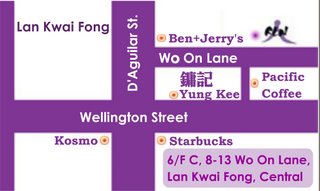 About the movie: It is a Chinese movie (of course), and has lots of good things said about it. The name is Yi Yi (one one). You can read some more about his movie here.
See you there and enjoy the movie!
Here's the details:
Date:
Time:
Venue: REN
Address: Unit C, 6/F, 8-12 Wo On Lane, Central (On the street of Ben & Jerry in LKF, next to OYSTERS. Alternatively, you can come out from the back entrance of Pacific Coffee on
 About the movie: It is a Chinese movie (of course), and has lots of good things said about it. The name is Yi Yi (one one). You can read some more about his movie here.
See you there and enjoy the movie!
Thursday, March 09, 2006
wu wei - Taoist concept
In an article in Fortune, Making Your Work Working For you, by Jerry Useem, he gave a very clear and easy to understand defination of wu-wei. I really liked his explanation, and wonder if he can speak, read and write Chinese, and if he read Laozi's Dao De Jing.
Here's the quote:
Have you achieved wu-wei in learning Mandarin? In Chinese character wu wei is 无为.
Here's the quote:
Wu-wei, which translates literally as 'non doing'. A better translation would be more like 'effortless effort'; wu-wei describes a state in which the world seems to be working for us. We feel calm yet alert, focused yet receptive, drawing force from the storm while standing in its eye. Like the marathoner whol feels pulled forward, we accomplish the most with the minimum of energy. In this state hard work does not feel like hard labor. Nor does it feel like play. It feels a lot like the Aristotelian concept of hapiness: the full exercises of the thing we are meant to be doing.
Have you achieved wu-wei in learning Mandarin? In Chinese character wu wei is 无为.
Wednesday, March 08, 2006
Transcript of podcast
This is a new experiment.
For podcast 11 - About Oscar Winner Li An, the transcript in pinyin and simplified characters is available on the online catalog at the cost of US$1. If you find it interesting and also helpful to read the transcript after you listen to the podcast, let me know.
And if you got any suggestions, do let me know. So I can do future improvement.
For podcast 11 - About Oscar Winner Li An, the transcript in pinyin and simplified characters is available on the online catalog at the cost of US$1. If you find it interesting and also helpful to read the transcript after you listen to the podcast, let me know.
And if you got any suggestions, do let me know. So I can do future improvement.
Monday, February 27, 2006
Learning Language Enhances (Or Motivates) Trip Abroad
Below is an article from Los Angeles Times. After reading it, you will agree with me that MSL Learning Center students did a far better job in learning Mandarin, quicker and therefore better. If you take lessoons twice a week, and 2 hours each lesson, 30 weeks is what you need to achieve a modest level of proficiency.
"Prior knowledge does seem to help activate the brain," said Renee Jourdenais, an assistant professor in the Graduate School of Language & Educational Linguistics at the Monterey Institute of International Studies.
Of course, some languages are more difficult than others for native English-speakers to learn, because their writing and sounds differ so widely, Jourdenais said.
At the Defense Language Institute Foreign Language Center in Monterey, Calif., which is dedicated to getting U.S. diplomatic personnel up to speed before a foreign posting, basic French and Spanish courses designed to give students a modest level of proficiency last 25 weeks. Czech and Russian programs run for 47 weeks; beginner Mandarin Chinese and Arabic courses take 63 weeks.
Read the whole articel here.
Saturday, February 25, 2006
Saying 'nihao' to Mandarin
China's emergence as a world economic power has prompted the teaching of Mandarin in American schools; the Virginia-based American Council on the Teaching of Foreign Languages estimates between 30,000 and 50,000 American students are studying Mandarin.
Many of those students reside not just in cities with significant Chinese populations, but in the suburbs. Sharon, Milton, Hingham, and -- perhaps more predictably -- Quincy all offer Mandarin instruction, and Norwell may yet join them. But whether the programs continue is less certain than their success to date.
Read more in The Boston Globe.
Monday, February 20, 2006
An eye opening experience
 Last Saturday, I went to attend the Chinese calligraphy and brush painting presentation given by Li Slough. It was really an amazing experience!
Here's the artist.
She has been learning and practicing this art for almost five years. she shared with us her understaning and experience of this art and showed us her work.

She uses Chinese idioms and traditional Chinese blessings on her painting. The background paintings are all her work. Also, we had the opportunity to do a bit of bamboo leaves and brush strokes!
Li was doing demonstration.

Try!
Li Slough can be reached at 2547-7100. She loves to share her art with people and would like to meet more people who have the similar interests.
Thursday, February 16, 2006
Call for pupils to learn Mandarin
Pupils should be taught other languages such as Mandarin in school, a report for the British Council says.
he current dominance of the English language poses "serious" economic and political disadvantages for the UK, the study claims.
he current dominance of the English language poses "serious" economic and political disadvantages for the UK, the study claims.
UK graduates who speak only English will lose out to multi-lingual workers from other countries, the council says.
Read the full story here: BBC NEWS
Monday, February 13, 2006
Online Intro audio lessons available
All the idea started with a simple fact that intro students sometimes just didn't get enough practice, especially listening and speaking.
So the whole purpuse of creating audio lessons is based on that. To learn Mandarin anytime and anywhere!
Now you can take a look at our online learning page, and get a general idea of how it works. Also I have made purchasing Mandarin Express ebooks version possible. I hope this will help any many people as possible, because learning Mandarin should be fun!
So the whole purpuse of creating audio lessons is based on that. To learn Mandarin anytime and anywhere!
Now you can take a look at our online learning page, and get a general idea of how it works. Also I have made purchasing Mandarin Express ebooks version possible. I hope this will help any many people as possible, because learning Mandarin should be fun!
Saturday, January 28, 2006
Chinese Brush Painting
 Would you like to know a bit about Chinese Brush Painting or Chinese Calligraphy?
Li Slough has been studying both art forms for 5 years and invite you to come to her home and experience them in a new way. She will give a short talk on them and give a demonstration.
The schedule is set at 4 p.m. on February 18th.
If you would like to attend, please write to mslinfo@netvigator.com for the details!
Friday, January 27, 2006
Year of the Dog "good for marriage"
Couples across China are rushing to get married shortly after the Year of the Dog starts on Jan. 29 --a year considered by the elderly to be auspicious for weddings.
Read more from Xinhua.
Read more from Xinhua.
Monday, January 23, 2006
Monday, January 16, 2006
Type Pinyin
Here I found somebody did a great job in typing Pinyin. Check it out here: http://toshuo.com/?page_id=50
Thursday, January 12, 2006
How is language naturally acquired?
A quote from Derek Bickerton, PhD
Languages are naturally acquired by people listening to language. The human brain is built to analyze it. You know, there are a lot of places in the world-not in America-but in supposedly "backwards" places like West Africa, New Guinea, where it is commonplace to find people who speak half a dozen languages. How do they do that? There are no language schools. So, they do it because it's part of their lives. They go down to the market, they find people talking in 4 or 5 languages and if they're going to do any trade-or buy anything-they have to know just enough of the other language to get by. So, this is how languages are learned, whether by adults or by children-by listening and interacting with real people in real-life situations.
Languages are naturally acquired by people listening to language. The human brain is built to analyze it. You know, there are a lot of places in the world-not in America-but in supposedly "backwards" places like West Africa, New Guinea, where it is commonplace to find people who speak half a dozen languages. How do they do that? There are no language schools. So, they do it because it's part of their lives. They go down to the market, they find people talking in 4 or 5 languages and if they're going to do any trade-or buy anything-they have to know just enough of the other language to get by. So, this is how languages are learned, whether by adults or by children-by listening and interacting with real people in real-life situations.
Cantonese Is Losing Its Voice
Speakers of the spicy tongue that can make words of love sound like a fight are having to learn its linguistic kin, the mellower Mandarin.
Read more here: LA Times
Read more here: LA Times
Wednesday, January 11, 2006
On line bookstore is ready

Mandarin Express Basic Level B was recently completed and printed!! What a relief! Now the first two levels are nicely put together.
I also discovered Paypal system. That is the reason that the online Mandarin bookstore is ready. So far I have listed Intro Level A and B, Basic Level A and B, and a workbook.
If you want to take a look, click here: http://www.msllearningcenter.com/online_bookstore.htm
Tuesday, January 03, 2006
New Year's Resolutions
New year - new you!
"New Year's Resolutions" is definitely a western term for me. What do you want to change or improve upon the New Year? Change jobs, better dieting, or learn Mandarin?
In China, traditionally New Year alone isn't the most critical point to make changes. The season spring is. Here I try to compare the differences.
Point one: Time span is different when it comes to making decisions.
Western: New Year's Resolutions
Chinese: A year's plan is made in spring.
Point two: When it's the end of it.
Western: And every year, many people discover that January's best-laid plans are easily broken by March. "People have really great intentions, and then ... resolutions start to become less important," says Lavalife.com's Ms. Miller.
Chinese: Since spring is the season to make plans, if by Summer you haven't got anywhere, you know your year plan isn't working any more.
But maybe this time is different. You made plan and you carry on and you achieve it. So by the next New Year, you will be very satisfied with yourself.
I can't say other things like better dieting, exercises (I am still gaining weight after four years work out.), but if you want to set a plan on learning Mandarin, here's a achievable plan:
If the only thing you can say is hello and thank you now, by next New Year you can easily have a nice little talk with Chinese people by finishing Intro Level A and B. No need to do more than that.
"New Year's Resolutions" is definitely a western term for me. What do you want to change or improve upon the New Year? Change jobs, better dieting, or learn Mandarin?
In China, traditionally New Year alone isn't the most critical point to make changes. The season spring is. Here I try to compare the differences.
Point one: Time span is different when it comes to making decisions.
Western: New Year's Resolutions
Chinese: A year's plan is made in spring.
Point two: When it's the end of it.
Western: And every year, many people discover that January's best-laid plans are easily broken by March. "People have really great intentions, and then ... resolutions start to become less important," says Lavalife.com's Ms. Miller.
Chinese: Since spring is the season to make plans, if by Summer you haven't got anywhere, you know your year plan isn't working any more.
But maybe this time is different. You made plan and you carry on and you achieve it. So by the next New Year, you will be very satisfied with yourself.
I can't say other things like better dieting, exercises (I am still gaining weight after four years work out.), but if you want to set a plan on learning Mandarin, here's a achievable plan:
If the only thing you can say is hello and thank you now, by next New Year you can easily have a nice little talk with Chinese people by finishing Intro Level A and B. No need to do more than that.
Tuesday, December 13, 2005
A three and half hours hiking!
A break through thousands of staircases .
.

A nice view.
Smile the roses.

A group photo.
 .
.
A nice view.

Smile the roses.

A group photo.
Monday, December 05, 2005
The Emeselles
Hiking?
We plan to go hiking at Dragon's Back near Shek'O this coming Sunday, 11 December. Please join us if you have time. So far we have about 8 people who have confirmed.
The plan is: we all meet at Shau Kei Wan station, exit A2 at 10:00 am and then either take a bus or share a taxi to the trail which is not too far from the Shau Kei Wan station. The hike will be roughly 3 hours, depending on how strong your legs are. As the weather has gotten pretty cool, I assume that we will walk pretty fast. After we complete the Dragon's Back trail, we will catch a bus to Shek'O to have lunch at a restaurant.
Please let us know if you have any preference for a restaurant. There is a famous Thai-Chinese restaurant there. If you agree with that choice, we will try to book a table for all of us.
Please let me know by this coming Friday, whether you can come. Please make sure you bring suitable gear for walking. Dragon's Back can get pretty windy, so make sure you bring a jacket with you and water.
If you have any question, please write to wantanee@gmail.com or post your comments on this blog. Hope to see you guys there.
We plan to go hiking at Dragon's Back near Shek'O this coming Sunday, 11 December. Please join us if you have time. So far we have about 8 people who have confirmed.
The plan is: we all meet at Shau Kei Wan station, exit A2 at 10:00 am and then either take a bus or share a taxi to the trail which is not too far from the Shau Kei Wan station. The hike will be roughly 3 hours, depending on how strong your legs are. As the weather has gotten pretty cool, I assume that we will walk pretty fast. After we complete the Dragon's Back trail, we will catch a bus to Shek'O to have lunch at a restaurant.
Please let us know if you have any preference for a restaurant. There is a famous Thai-Chinese restaurant there. If you agree with that choice, we will try to book a table for all of us.
Please let me know by this coming Friday, whether you can come. Please make sure you bring suitable gear for walking. Dragon's Back can get pretty windy, so make sure you bring a jacket with you and water.
If you have any question, please write to wantanee@gmail.com or post your comments on this blog. Hope to see you guys there.
Subscribe to:
Posts (Atom)